Entry · Ref OLDASMDO
Peptide Pureness & Quantitation Testing
- Posted
- 2026-10-24
- Last amended
- 2026-10-24
- Account
- @donovanmsau382
Exactly How To Check Out A Peptide Purity Examination: Hplc, Mass Spectrometry And Coa Interpretation For Uk Researchers 2026
The quality and integrity of a peptide pureness measurement depend on technique criteria and documents high quality. The mobile phase, often a blend of water, acetonitrile, and an acid modifier, is stored in tanks and provided with the system by a high-pressure pump. The pump preserves specific flow rates, typically in the series of 0.5 to 2.0 mL/min depending on the approach and column format. High stress requires the mobile phase with securely loaded particles inside the column, generating sharper splittings up and higher resolution than standard low-pressure chromatography.A solitary common chromatographic method is commonly not enough for peptides that are hydrophobic, extremely standard, carefully related in sequence, or partly cleansed. We offer HPLC and UPLC purity evaluation process that concentrate on valuable separation instead of only creating a portion. We develop logical workflows around the example kind, series features, alteration Recovery Research account, and choice context. Projects might involve unrefined intermediates, purified peptides, stored great deals, client-supplied products, or products created with our customized peptide synthesis platform.
Peptide Screening: Hplc & Mass Spectrometry Pureness Confirmation
- William is a research analyst at Peptides Lab UK, being experts in research peptides, laboratory substances, and sourcing standards for high-purity peptide products.
- If a peptide is re-tested after storage space stress and anxiety, HPLC can reveal whether brand-new contamination peaks have appeared or whether the primary height area has actually decreased.
- With years of analytical screening experience and progressed instrument systems, BOC Sciences gives extensive peptide quality screening solutions across the entire process from resources to formulas.
- In The KnowGet access to our magazine, new arrivals, and most recent laboratory records.
If the COA details "total impurities", that enhances the purity figure (e.g., 98% pureness suggests 2% overall pollutants). Many COAs additionally define recognized or "specified contaminations" versus unspecified ones, each with their private portions if above a certain limit. This degree of information helps scientists comprehend if any small peptide byproducts are present. If you see multiple large optimals of similar height, you're looking at either a low-purity sample or a blend. If the main peak has a noticeable "shoulder"-- a bump on one side-- that frequently suggests a very closely related contamination (like a deletion peptide) that the column couldn't fully resolve. The peptide is travelled through an easy filtration step (often gel purification or a fast reversed-phase cleanup) to remove salts, small-molecule byproducts, and scavengers from the cleavage action.
Extra Logical Examinations On Top Quality Coas
BOC Sciences uses extensive peptide testing services to customers across industries, making sure items meet stringent market needs and ensuring item uniformity, security, and effectiveness. It additionally sustains traceability-- each set's lab validation report can be connected to its COA and regulatory filings, producing a clear proof. In short, strenuous laboratory recognition is how you show to regulators that your peptide satisfies all quality specifications. It helps prevent conformity problems such as failed audits or item recalls due to high quality issues. This not only satisfies lawful needs yet ultimately shields client security.
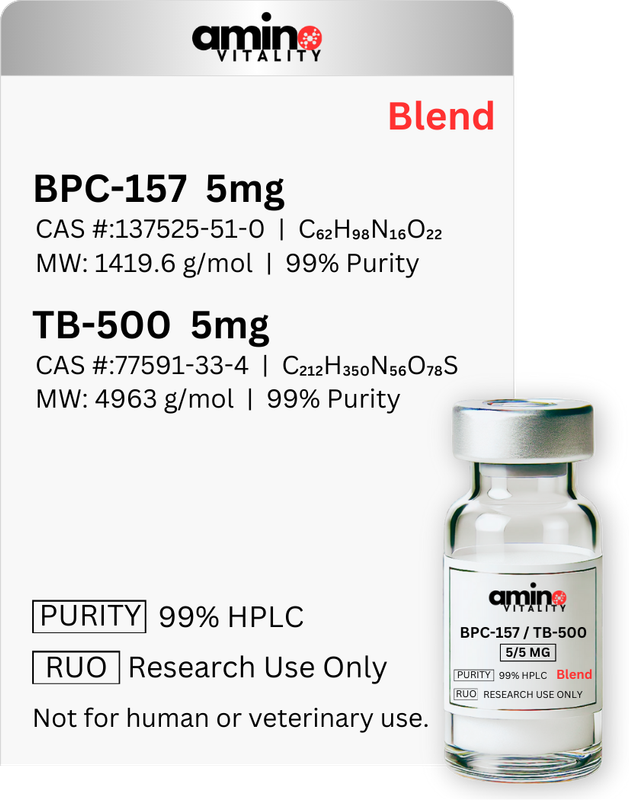
Not every application demands 99% purity, and filtration is a considerable part of peptide manufacturing expense. Trace amounts of solvents utilized throughout synthesis and filtration-- acetonitrile, dimethylformamide (DMF), dichloromethane-- can stay in the end product. These are usually existing at very low degrees in correctly manufactured peptides and are controlled by ICH Q3C standards for appropriate limitations. If the target peptide's peak accounts for 99.1% of the overall top area, the peptide is reported as 99.1% pure by HPLC. Several trusted research peptide vendors utilize third-party laboratories; some conduct in-house screening with magazine of lab credentials.
These can be specifically troublesome due to the fact that their chromatographic actions is extremely similar to the target peptide, making them harder to divide during filtration. When a peptide is 98% pure, that staying 2% isn't arbitrary noise-- it specifies, identifiable types of results. Mass spectrometry measures the molecular weight of a compound with extreme precision. For peptides, one of the most common strategies are electrospray ionization (ESI-MS) and matrix-assisted laser desorption/ionization time-of-flight (MALDI-TOF). HPLC divides a mix right into its private parts based upon exactly how each molecule communicates with a particularly created column. FDA and the European EMA have developed guidelines mandating complete evaluation and quality control for peptide products to make certain safety and security and effectivenessr. In the context of pharmaceutical or clinical-grade peptides, Research Peptides research laboratory validation is indispensable to fulfilling these guidelines. For example, before a peptide medicine can go into human tests, its supplier should demonstrate the identity, pureness, strength, and safety and security of the peptide through validated analytical techniques. Peptide pureness testing information are mandatory in preclinical researches and must be included in investigational brand-new medication (IND) applications and later on new medicine applications (NDAs).